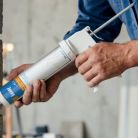


In passive fire protection, every detail matters. Even the smallest oversight—like an untreated joint in an otherwise fire-resistant wall—can undermine the performance of the entire system. That’s why in modern construction, it’s not enough for the structural elements to be fire-rated. All joints within fire-rated constructions must also meet fire protection standards, and in Europe, that means tested and certified systems according to EN 1366-4.
Why Fire-Resistant Joints Matter
Joints are essential in construction. They allow for material transitions, structural movement, and thermal expansion. However, they also introduce potential weak points where fire and smoke can pass through.
If a wall or floor has an EI-rated fire resistance, the joint within that assembly must be just as capable of resisting fire, heat, and smoke. Otherwise, the compartmentation fails—and with it, the building’s fire safety concept.
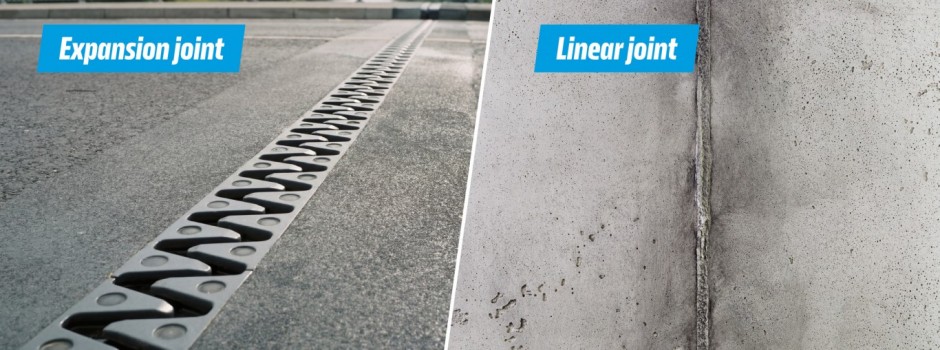
Two Types of Joints – Two Fire Challenges
In fire protection, joints are typically divided into two categories based on their movement requirements:
- Movement Joints (Expansion Joints)
- Designed to absorb larger structural movements—thermal expansion, seismic activity, or deflection.
- Common in high-rise buildings, bridges, and industrial facilities.
- These joints must remain flexible, while also maintaining fire resistance—a significant technical challenge.
- Fire solutions must allow for movement up to 25% or more, without compromising the fire rating.
- Static or Low-Movement Joints (Linear Joints)
- Occur where different materials meet—e.g., wall-to-ceiling or wall-to-wall transitions.
- Allow for minimal movement due to shrinkage or settlement.
- Require rigid or semi-flexible firestopping materials that restore the fire compartmentation integrity.
Tested Systems – Not Just Products
European standard EN 1366-4 defines the requirements for testing fire-resistant joint systems. That means:
- You cannot mix and match components—the sealant, backing material, joint width, and installation method must all match the certified configuration.
- Fire resistance is verified only as a complete system, under simulated fire conditions and movement.
This is not a recommendation—it’s a legal and safety requirement. Without certified joint systems, the fire protection claim of the entire construction may be invalid.
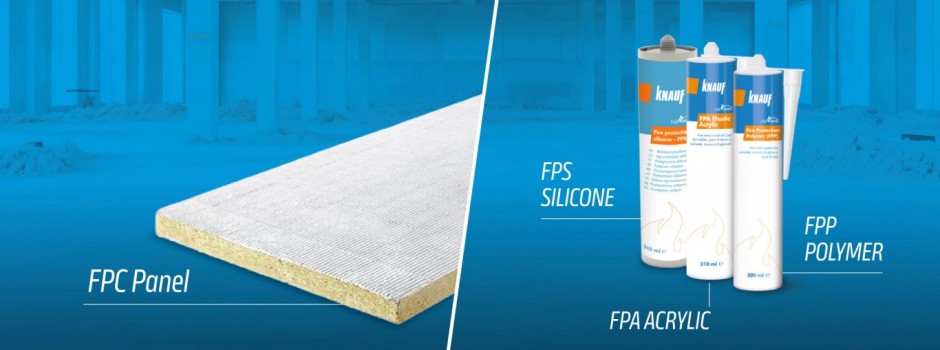
Knauf FireWin Solutions: Tested. Trusted. Certified.
At Knauf, fire protection systems for joints are designed to meet the highest performance standards—both in fire resistance (up to EI180) and in movement accommodation (up to 25%). The product range includes:
- FPC Panel – a robust, flexible system for wide movement joints, offering high fire resistance and durability.
- FPA Acrylic – an intumescent acrylic sealant for linear joints, providing excellent adhesion and fire protection.
- FPP Polymer – a high-performance, elastomeric sealant for dynamic joints, combining flexibility with fire stopping.
- FPS Silicone – a silicone-based solution for demanding environments, offering both UV/weather resistance and fire protection.
Each solution is independently tested and certified according to EN 1366-4, with documented performance characteristics, installation guidelines, and compliance data.

Don’t Leave Joints to Chance
Fire safety is not just about choosing fire-rated boards or slabs. Every detail counts—especially the joints. Architects, engineers, and installers must ensure that joints:
- Match the type and movement requirements of the structure,
- Are sealed with certified fire-resistant systems,
- Are installed according to the tested and approved method.
When this is done right, the entire construction behaves as one cohesive fire barrier, preserving life safety and regulatory compliance.
To make sure, you can always explore the full Knauf FireWin catalogue or contact our technical support to find the right solution for your project.